A single sprinkler head can empty into a shop and the units around it long before anyone arrives to turn it off. Hemet has seen this kind of loss, and the first day decides how much stock, flooring and downtime a business loses.
Key takeaways
- In July 2011 a fire sprinkler head went off in a retail center on Esplanade Avenue and flooded a Lego collectibles shop.
- In January 2010 the Historic Hemet Theater closed after water damage from a fire in adjacent storefronts.
- The first day is for safety, photos, moving stock and starting extraction.
- Shared walls and ceilings mean neighbors may be wet too, so landlord and tenants need to coordinate.
- Phased drying lets part of a business keep running while another suite dries.
How sprinkler and fire water floods a shop
A fire sprinkler head delivers water at pressure and keeps going until the supply is closed. A broken head or an accidental release can soak a floor, a ceiling and the stock in a few moments.
In July 2011, a sprinkler head went off in a retail center on Esplanade Avenue in Hemet and flooded a Lego collectibles shop. Paper goods, boxes and collectibles do not tolerate that kind of water.
Fire water can close a building for a long time
Water from firefighting is as damaging as the fire itself in some cases. In January 2010, the Historic Hemet Theater closed after water damage from a fire in adjacent storefronts.
The theater was built in 1921 in downtown Hemet, and a musty smell kept it closed for a year. The lesson for any older building is that wet materials left in place cause problems long after the water stops.
Sprinkler water is not always clean
Water that has sat inside a sprinkler system can be stale and dark, and it carries whatever the pipes held. When it lands on carpet tile, ceiling tiles or stock, it can leave stains and an odor.
A team treats the affected materials with care, removing what cannot be dried and cleaning what can. The goal is a suite that is safe to reopen, not just one that looks dry.
Older buildings and the lesson of the Historic Hemet Theater
Older commercial buildings hide water in plaster, old framing and layered finishes. Water that seems to dry on the surface can stay inside the structure.
The Historic Hemet Theater closing for a year is a reminder that unseen moisture shows up later as damage and smell. Moisture readings in walls, floors and ceilings are the way to know a space is truly dry.
A building owner with an older structure should ask for those readings in writing before reopening to customers.
What to do in the first day
The safe order protects people first and property second. A tenant or manager can follow a short list while the restoration team is on the way.
- Confirm everyone is clear and the fire department has released the space.
- Ask the landlord or building manager to close the sprinkler or water supply valve.
- Photograph the ceiling, floor, shelves and stock before moving anything.
- Lift boxes and inventory off the floor and onto dry shelves.
- Call for commercial water damage help and extraction.
Protecting stock, records and equipment
A retail or office tenant has more to lose than flooring. Stock, shelving, registers, computers and paper files all sit within reach of falling water.
The first step is to move what can be moved to dry ground. The second is to cover what cannot be moved so dripping ceiling water does not add to the loss.
- Lift boxes and cartons off the floor and away from walls.
- Move computers, registers and paper files to a dry room.
- Cover shelving and counters with plastic sheeting.
- List damaged items with quantities and approximate values for the claim.
- Keep receipts for temporary storage and emergency work.
Landlord, tenant and neighbors
Retail centers share walls, ceilings and sometimes drainage. Water in one suite often travels into the next.
The lease usually says who handles the building and who handles the contents. A quick conversation with the landlord about the insurance carrier, the contractor and access avoids delays.
A manager who coordinates early also helps the other tenants, since a restoration team that is already on site can check neighboring suites for hidden moisture. More on how the team works across the city is on the Hemet water damage restoration page.
Questions to settle early
Two or three questions decide how smoothly the next days go.
- Who calls the landlord insurer, and who calls the tenant insurer.
- Whether neighboring suites are wet and need the same team.
- Who approves the restoration scope and signs the work order.
Documentation
A list of damaged stock, receipts and dated photographs supports both sides of the claim. The restoration team adds moisture readings and daily logs.
How a retail suite is dried
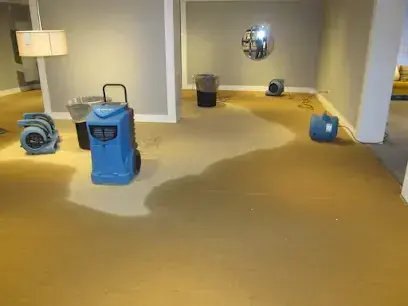
Extraction removes standing water from the floor and any wet ceiling debris. Wet ceiling tiles come down, and carpet tile and base are removed where they hold water.
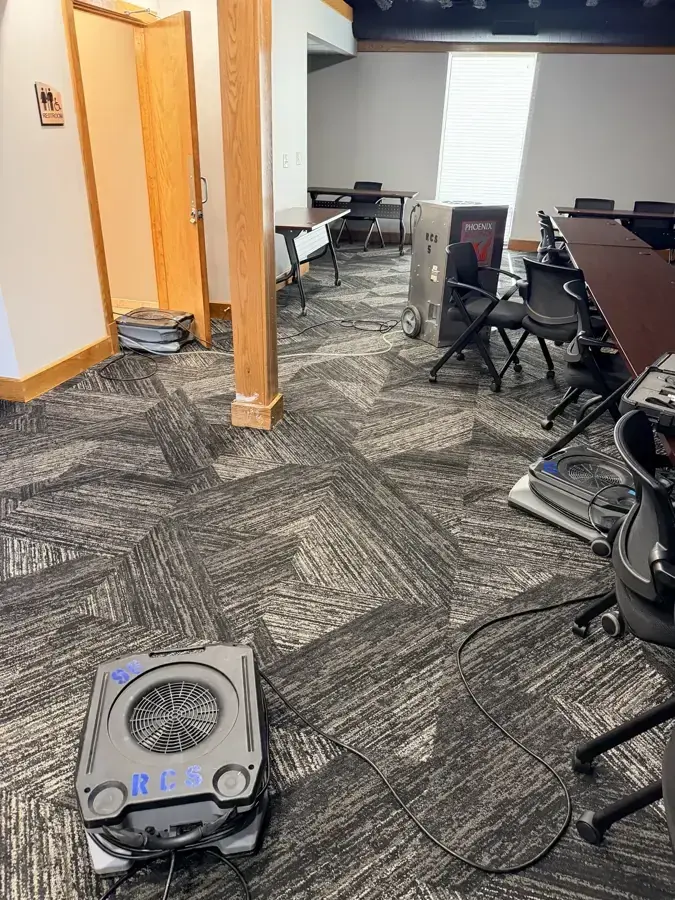
Structural drying follows. Air movers and dehumidifiers run behind containment, with readings taken until the walls, floor and ceiling reach the drying goal.
A business owner should ask for the containment plan, the equipment count and the date the first readings will be taken. These details make it easier to plan staff schedules and customer notices around the work.
- Ceiling tiles and wet insulation removed.
- Carpet tile and wall base lifted where wet.
- Containment set so work in one suite does not disturb another.
- After hours work when a business needs to keep trading.
Cost and downtime
The site prints commercial ranges that start at $3,000 to $10,000 for one suite or office. Several suites run $10,000 to $30,000, and a large building runs $30,000 to $75,000.
Phased drying can reduce downtime. One area is released while another continues, so a business is not closed longer than the work requires.
For a business that spans several locations, the same commercial water damage process applies, with a written scope for each suite and a daily record of readings.
A building owner should also confirm who is allowed to enter after hours. Access arrangements are one of the most common reasons a dry out starts late in a retail center.
Questions
Who pays when a sprinkler head releases in a shared center?
It depends on the lease and the cause. The landlord insurer and the tenant insurer may both be involved, so the lease and the policies should be read early.
Can stock be saved after sprinkler water?
Non porous items can often be dried and cleaned. Paper, cardboard and fabric are harder to save, so photographs and a list help with the claim.
How long does a suite stay closed?
That depends on how wet the space is and how far the water spread. Phased drying and after hours work can shorten the closure.
Why does a smell stay after a fire water loss?
Wet building materials that stay in place keep giving off odor. Removing and drying them, not covering the smell, is what clears it.
Do neighboring suites need to be checked?
Yes. Shared ceilings and walls carry water sideways, and a neighbor may be wet before anyone notices.
Is a sprinkler release treated as clean water?
Not always. Water that sat in a sprinkler system can be stale or dark, so the team may treat it with more caution than a simple supply leak.