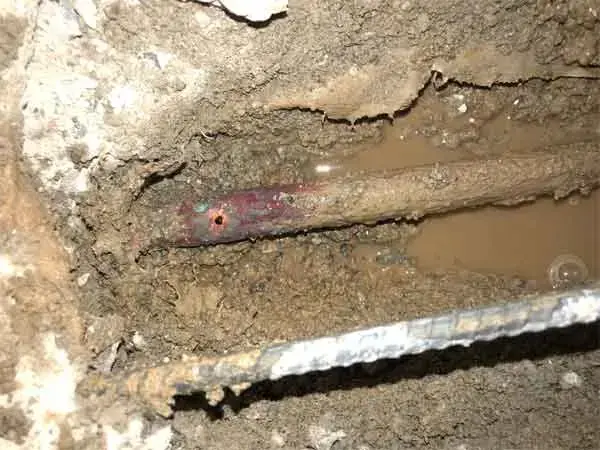
A slab leak hides under the floor, so the first signs are usually small and easy to dismiss. In Menifee, the Sun City ranch homes built on slabs in the 1960s and 1970s are where this problem comes up most, because copper pipes run beneath those older concrete floors.
Key takeaways
- Warm spots on a floor, a water meter that keeps moving and the sound of running water in a quiet house are the classic early signs.
- Older Sun City ranch homes sit on slabs from the 1960s and 1970s, with copper pipes under the concrete.
- A plumber finds and reroutes the leak first, then the floor, baseboards and slab are dried to readings.
- A leak caught early in one room can stay in the $1,800 to $3,500 range printed on the site, while a long hidden leak climbs much higher.
- Photographs and meter readings taken before anything is moved help the insurance claim.
Why Sun City slabs are the usual suspects
Sun City ranch homes were built on concrete slabs in the 1960s and 1970s. The water supply pipes in many of them run in copper beneath that concrete, out of sight and out of reach.
Copper that is decades old can wear through at a bend, a joint or a spot where it rubs the slab. Once a pinhole opens, water has nowhere to go except up through the floor or sideways under it.
- Age: Pipes under a slab from the 1960s and 1970s have had a long time to wear.
- Location: The pipe cannot be seen, so a small leak can run for weeks.
- Spread: Water follows the slab and reaches rooms far from the actual break.
Warning signs a homeowner can notice
Most slab leaks announce themselves quietly. The signs below show up inside the house, in the yard and on the water bill.
Inside the house
Hot water leaks often warm the floor above them. A bare foot may find one patch of tile or laminate that feels warmer than the rest.
Damp carpet, a lifting floor edge or baseboards that swell and stain along one wall are other signs.
- A warm spot on the floor that does not match the sun or the vents.
- Carpet that stays damp with no source above it.
- Baseboards that stain, swell or pull away from the wall.
- A faint sound of running water when every fixture is off.
Outside and on the bill
A water bill that jumps with no change in habits is one of the clearest warnings. So is a meter dial that turns while the house is quiet.
- A higher bill with the same number of people at home.
- Wet ground or a green, soft patch of yard beside the slab edge.
- Low water pressure at several fixtures at once.
A simple meter check before calling anyone
A homeowner can run a short test without tools. The goal is to learn whether water is moving through the house when nobody is using it.
Photographs of the meter and the floor taken before anything changes also give the insurer a clear record.
- Shut off every faucet, the washer, the dishwasher and the ice maker.
- Read the meter dial and note whether the small leak indicator is turning.
- Wait and read it again with nothing running.
- If the reading moved, close the main valve and call a plumber for leak detection.
- Take photographs of the meter, any warm or damp floor areas and the baseboards.
What happens after the plumber finds the leak
Leak detection comes first, because drying a floor while the pipe still leaks only repeats the problem. The plumber locates the break and reroutes the supply through the walls or attic instead of repairing it under the concrete.
The restoration work starts once the water is off. The slab leak water damage team checks how far the moisture has spread before opening a single floor.
Extraction and moisture mapping
Where standing water or soaked carpet is present, water extraction removes it first. Moisture meters and a thermal camera then map the wet areas on the floor and the lower walls.
The map decides what is lifted. Carpet and pad may be pulled, hard flooring removed and the bottom of the drywall cut so the cavity can dry.
Drying the slab itself
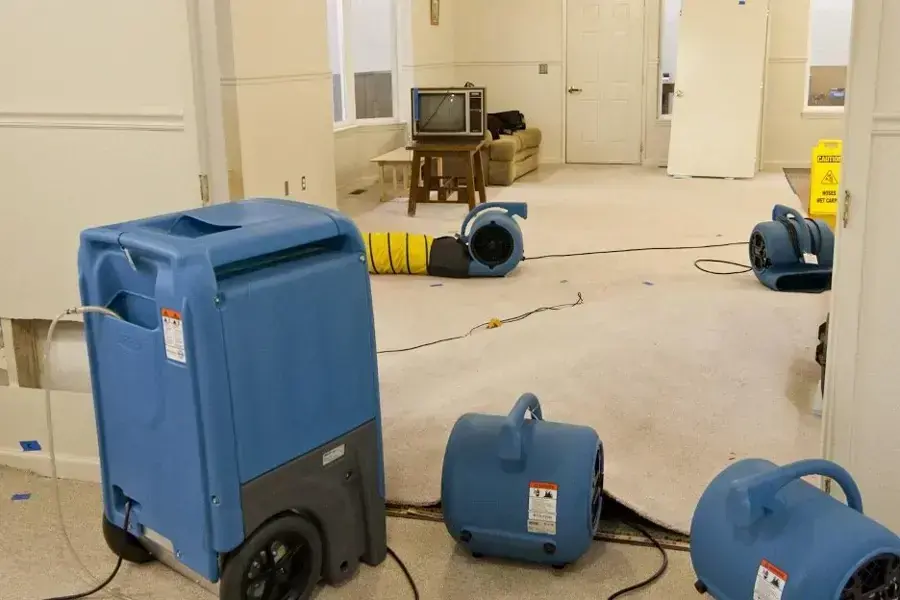
Concrete holds water and releases it slowly. Slab drying often uses drying mats and desiccant units, with air movers and dehumidifiers running until the readings fall to the drying goal.
The structural drying step is the longest part of the job, and it is the part that cannot be rushed.
- Carpet and pad lifted where they are wet.
- Baseboards pulled so the wall base can breathe.
- Equipment placed and checked until readings reach the drying goal.
What the cost depends on
The site prints three typical ranges for slab leak water damage. A leak caught early in one room is $1,800 to $3,500, several rooms on the slab are $3,500 to $8,500, and a long hidden leak is $8,000 to $15,000.
The difference is mostly time. Water that ran for weeks reaches wall cavities, cabinet bases and more flooring, and each of those adds work.
The drying time estimator gives a general idea of how long equipment may run. Coverage depends on the policy, so the insurer should be asked about the cause of the loss and the pipe repair separately.
Slab leaks in newer Menifee homes
Slab leaks are not only a Sun City story. Menifee Lakes and Heritage Lake tracts from the late 1980s and 1990s, and the large new tract neighborhoods built from the 2000s on, also sit on concrete.
The signs are the same in any of them: warm floors, a moving meter and damp baseboards. What differs is the pipe material and the age, which a plumber reads once the floor is opened.
- Older ranch homes: Copper under slabs from the 1960s and 1970s.
- Late 1980s and 1990s tracts: Menifee Lakes and Heritage Lake homes.
- Newer tracts: Homes from the 2000s on, with different plumbing.
Handling the loss in the first day
A calm first day keeps the damage smaller. The order matters more than speed.
- Close the main water valve if the meter test shows movement.
- Move rugs, furniture legs and boxes off wet flooring.
- Do not pull up flooring before it is photographed.
- Call a plumber for detection and a restoration team for extraction and drying.
- Keep receipts and notes for the claim.
Questions
How can a homeowner tell a slab leak from a roof or wall leak?
A slab leak shows at floor level, often with a warm spot or damp baseboards and no stain on the ceiling. A meter that moves with every fixture off points to a leak somewhere in the supply pipes, and a plumber can confirm where.
Do older Sun City homes leak more often than newer ones?
Homes on slabs from the 1960s and 1970s have copper pipes that have been in service a long time, so wear is a common cause. Newer tracts have different plumbing and different failure points.
Is the pipe repaired under the concrete?
Often the plumber reroutes the supply through the walls or attic and caps the old pipe. That avoids breaking the slab and gets the water off the floor.
How long does a slab take to dry?
It depends on how long the leak ran and how thick the wet material is. Drying continues until moisture readings reach the goal, not for a fixed number of days.
Will insurance cover a slab leak?
Coverage depends on the policy and the cause. Many policies treat sudden water damage differently from long term wear, so the claim should be read against the policy wording.
Should a homeowner shut the water off for a suspected slab leak?
Yes, closing the main valve stops the leak while it is being located. Water can be turned back on for short periods once the plumber has isolated the problem.