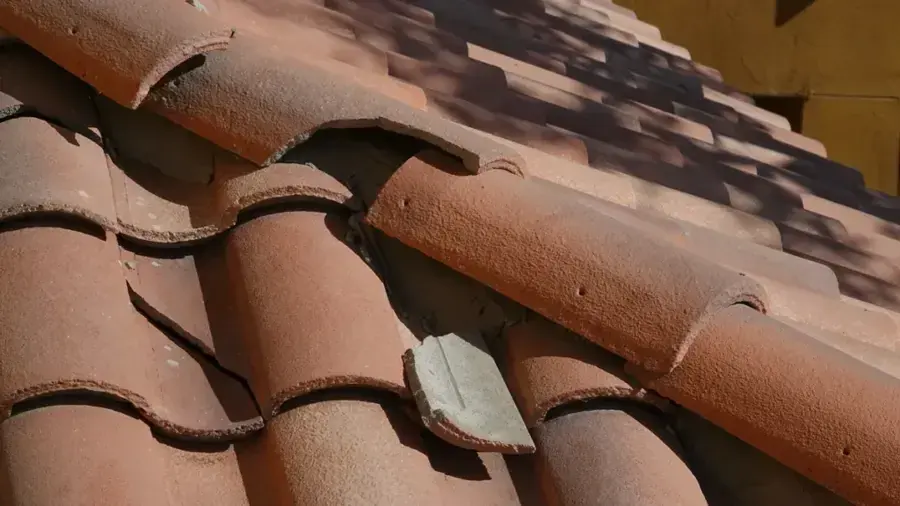
Menifee has hot dry summers and short wet winters, so a roof can go months without meeting real rain. Tropical Storm Hilary in August 2023 was the kind of rare heavy storm that tests a tile roof.
Key takeaways
- Menifee roofs often go a long time without heavy rain, so small weaknesses stay hidden.
- Santa Ana wind driven rain can get past cracked tile and tired underlayment.
- Wet attic insulation holds water against the ceiling and stains drywall below.
- A ceiling stain after a storm should be photographed and checked before it is painted.
- The ceiling and joist bays are dried to readings, and wet insulation is removed.
What Hilary showed about Menifee roofs
Tropical Storm Hilary reached Menifee in August 2023. The local climate is hot and dry in summer with short wet winters and rare but heavy storm bursts.
A storm like that tests a roof in a way ordinary weather does not. Weak spots that sat dry for years take in water for the first time.
The same pattern repeats with any heavy storm in Menifee. After months of dry weather, the first real rain finds every small weakness at once.
Homes in Sun City, Menifee Lakes, Heritage Lake and the newer tract neighborhoods all have different roof ages, so the weak points differ from one street to the next.
- Cracked or slipped tile that no one had looked at.
- Underlayment worn thin by years of heat.
- Flashing and vents that had loosened.
- Gutters and drains that were full of dust and debris.
How wind driven rain gets past tile
Tile roofs shed most rain, but the tile itself is not the waterproof layer. The underlayment below it does that job.
Santa Ana winds can push rain sideways and upward under the edges of tile. If the underlayment is old or torn, the water reaches the roof deck and the attic.
Wind adds force that ordinary rain does not have. A roof that sheds a gentle winter shower can leak under a wind driven storm because the water is pushed upward and sideways.
Where leaks start
Leaks usually begin where the roof changes direction or something passes through it.
- Valleys where two roof slopes meet.
- Vents, pipes and chimneys that pass through the roof.
- Edges and ridges where tile may have shifted.
- Spots where a tile is cracked.
Where the water goes
Water that gets under the tile runs along the roof deck until it finds a gap. It then drops onto insulation and spreads before it shows on the ceiling.
What wet insulation does
Insulation in an attic acts like a sponge. It soaks up water and holds it against the ceiling drywall for days.
That is why a ceiling stain may appear well after the rain has stopped. The insulation keeps feeding water into the drywall.
A ceiling that looks only slightly stained can hide a large wet area above it. The team checks the attic side as well as the room below so nothing is missed.
- Drywall softens and stains.
- Paint bubbles or peels.
- The ceiling may sag under the weight of the water.
- Odor can develop if the material stays wet.
What a homeowner should do after a storm
A few quick steps limit the damage. They do not need ladders or roof access.
A phone video from the attic hatch, taken safely, can also help. It shows wet insulation and the direction of any drip, which makes the roofer's work faster.
- Photograph the stain from several angles and mark its edge with a pencil.
- Place a bucket under any drip and move furniture aside.
- Turn off ceiling fans and lights near a wet spot if water is close.
- Do not climb on a wet tile roof, since it is slippery and tiles can break.
- Call for roof leak water damage help and a roofer for the repair.
How the ceiling is dried
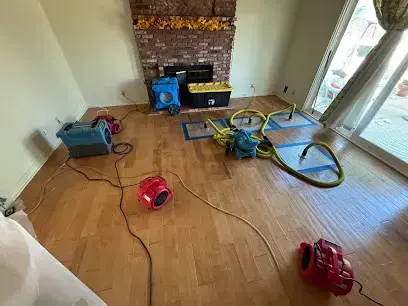
The restoration team checks the ceiling with moisture meters and a thermal camera. Wet insulation is removed from the attic and drywall is cut open if it is soaked.
The joist bays are then dried with air movers and dehumidifiers. The ceiling leak water damage work ends only when readings match dry reference spots.
Where the ceiling sags, a small hole can release trapped water into a bucket before the drywall fails. The team does this with care, since a soaked ceiling can drop without warning.
Small attic leak
A small leak caught early can be dried in place. The site prints $900 to $2,500 for that case.
Opened ceiling
When drywall and insulation come out, the room below is dried as well. That runs $2,500 to $6,500.
Storm damage in several rooms
A storm that wets several ceilings, walls and floors runs $6,000 to $13,000, with extended monitoring.
Roof repair and drying go together
A roofer repairs the tile, underlayment or flashing, and the restoration team dries the house. Neither job replaces the other.
Drying a ceiling under a roof that still leaks only starts the problem again. A temporary cover can protect the house until the roof is repaired.
The best time for a roof check is before the first winter rain. Menifee has short wet winters, so a quick inspection in the dry season can prevent a ceiling loss later.
- Roofer: Repairs the cause of the leak.
- Restoration team: Dries the structure and documents readings.
- Insurer: Reviews the claim and the cause of loss.
Preparing for the next rain
Menifee homes face another wet season every winter. A roof that is checked before the rain is less likely to leak.
A homeowner can look for cracked tile from the ground and ask a roofer to inspect underlayment and flashing. A structural drying plan is easier to avoid than to carry out.
See the structural drying page for how readings steer the work.
Gutters and drains also deserve a look. Dust and leaves that collect during a dry summer can block water and push it under tile at the roof edge.
Questions
Why did a ceiling stain appear days after the rain?
Wet insulation can hold water and feed it into drywall for days. The stain may show up after the rain has stopped.
Can a tile roof leak if the tile looks fine?
Yes. The underlayment below the tile is the waterproof layer, and it can fail even when the tile looks whole.
Should a homeowner go on the roof to check?
No. Wet tile is slippery and breaks easily. A roofer can inspect safely.
Does insurance cover roof leak damage?
It depends on the policy and the cause. Sudden storm damage is often treated differently from long term wear.
How long does a ceiling take to dry?
It depends on how wet the insulation and drywall are. Equipment runs until readings match dry reference spots.
What kind of storm tests a Menifee roof the most?
A rare heavy storm after a long dry spell, such as Tropical Storm Hilary in August 2023, finds weak tile, underlayment and flashing that ordinary rain would not.