Sewage rising in a tub, a shower or a floor drain is one of the most unpleasant water problems a home can have. The first question is usually where the blockage sits, in the house drain or out in the city sewer, and the answer decides who is called first.
Key takeaways
- Sewage water is contaminated and is handled with containment, protective gear and removal of porous materials.
- The City of San Jacinto Wastewater Department maintains the city sewer collection system, which has 2,774 manholes.
- All city sewage goes to the San Jacinto Valley Regional Water Reclamation Facility run by Eastern Municipal Water District.
- The outskirts of the city are served by Eastern Municipal Water District and Lake Hemet Municipal Water District, so the provider depends on the address.
- A plumber or the utility can sort out where the blockage sits; the cleanup does not need to wait for that answer.
What a sewage backup looks like
A backup does not always start with a flood. It can begin with a gurgling toilet, a tub that drains slowly or a floor drain in the garage or laundry room that bubbles.
When the blockage is bad enough, sewage rises from the lowest drain in the house. That is usually a tub, a shower or a floor drain, because they sit lowest on the system.
Sewage always seeks the lowest opening. A bathroom at the far end of the house may stay dry while a floor drain in the garage fills, because the garage sits lower than the main drain.
The color and smell matter too. Dark water with a strong sewer odor is a clear sign that waste water, not a clean supply leak, has come into the house.
- Gurgling: Toilets or drains make noise when another fixture runs.
- Slow drains: Several fixtures drain slowly at the same time.
- Odor: A sewer smell near a floor drain or bathroom.
- Rising water: Dark water comes up in a tub, shower or floor drain.
City sewer or private drain
The first clue is how many fixtures are affected. A clog in one sink or toilet is usually inside the house, while several fixtures backing up together points to the main drain.
If neighbors have the same problem, the city sewer is a likely cause. If only one home is affected, the problem may sit between the house and the main.
What the city maintains
The City of San Jacinto Wastewater Department maintains the city sewer collection system. It has 2,774 manholes, and the mains range from 6 to 18 inches across.
All city sewage is sent to the San Jacinto Valley Regional Water Reclamation Facility, run by Eastern Municipal Water District.
Which provider serves the address
The outskirts of San Jacinto are served by Eastern Municipal Water District and Lake Hemet Municipal Water District. A homeowner on the edge of the city should confirm the provider before calling.
Who owns each stretch of pipe between the house and the main is something the utility or a plumber can explain for a specific property.
What to do in the first day
Sewage water carries bacteria and should not be touched with bare hands or cleaned with ordinary towels. A few simple steps protect the family and limit the spread.
Household cleaners and drain chemicals are not a safe answer. Pouring them into a backed up drain can splash on skin and make the work harder for a plumber.
It also helps to write down when the backup started and which fixtures were in use. A plumber or the utility can use that to judge where the blockage may sit.
- Stop using toilets, sinks, showers and the washer so no more water enters the drain.
- Keep children and pets out of the wet area.
- Do not run a household vacuum on wet floors.
- Photograph the affected rooms and any stained belongings before anything is moved.
- Call a plumber or the utility for the blockage and sewage backup cleanup for the water.
How contaminated water is cleaned up
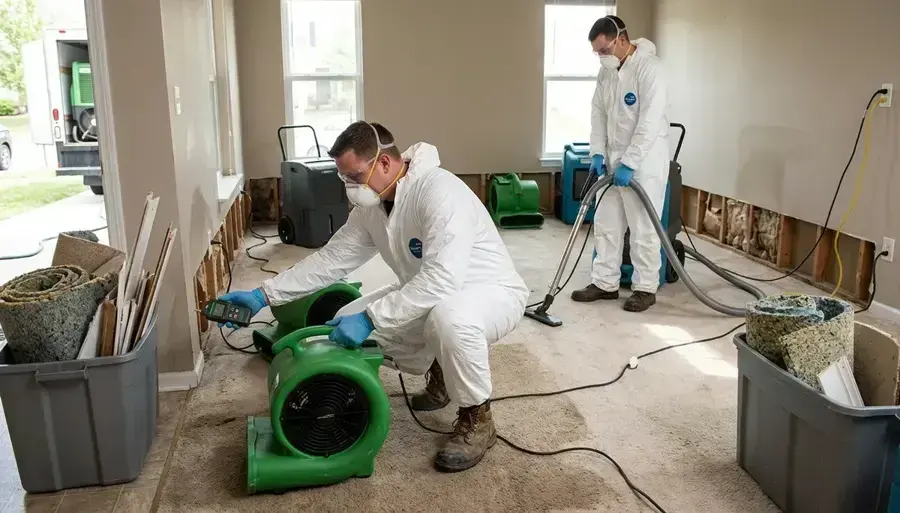
Sewage water is treated as Category 3 contamination. That means the work uses containment, protective gear and a stricter set of rules than a clean water leak.
The team seals the area, removes standing water and takes out materials that soaked it up.
The work is planned in stages so that clean areas of the house stay clean. Plastic sheeting and negative air keep sewage related dust and odor from moving into rooms that were not affected.
What gets removed
Porous materials hold sewage and cannot be cleaned reliably. They are removed and disposed of rather than dried in place.
- Carpet and pad in contact with the water.
- Flooring and wall base that took in the water.
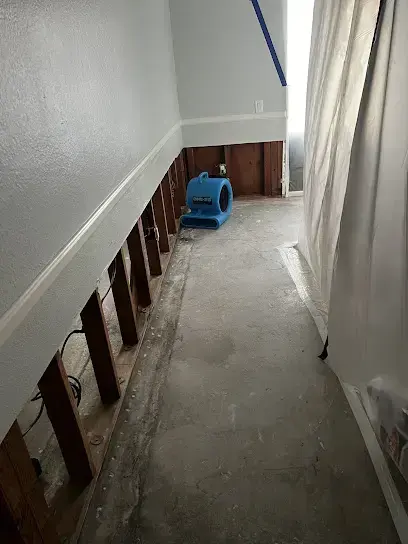
- Drywall cut above the water mark.
- Cabinet kicks and baseboards opened and cleaned.
What gets cleaned and dried
Hard surfaces are cleaned and treated with an antimicrobial. Water extraction removes the liquid first, and air scrubbers clean the air while the work is under way.
Air movers and dehumidifiers then dry the structure until moisture readings reach the goal.
Why prompt cleanup matters
Sewage soaks into porous materials quickly and spreads bacteria through a home. Odor can linger in carpet pad, wall cavities and subfloors long after the surface is clean.
Acting early limits how much material must be removed. It also reduces the risk of repeat problems when a damp space stays closed up.
A rug or piece of furniture that sat in sewage may be a total loss. Items that cannot be cleaned are photographed, listed and discarded, and the list becomes part of the claim.
Cost and insurance
The site prints three typical ranges for sewage and septic backup cleanup. One bathroom is $2,000 to $4,500, several rooms are $4,500 to $12,000, and a large or long standing backup is $12,000 to $25,000.
Coverage depends on the policy and the cause of the backup. Some policies need an added endorsement for sewer backup, so the policy wording is worth checking early.
The sewage backup cleanup page on the main site explains the same price ranges and process for the wider Menifee area, which many San Jacinto readers also search.
- Photographs of the water and affected rooms.
- A written list of damaged items.
- Receipts for emergency work and temporary lodging.
Preventing the next backup
Many backups start with what goes down the drain. Wipes, grease and other solids collect in pipes and eventually block them.
A homeowner who has had one backup can ask a plumber to inspect the main drain with a camera. A written note of what was found helps with any later claim.
City services also play a part. A homeowner who suspects the sewer main can call the City of San Jacinto Wastewater Department, and one on the outskirts can confirm the provider for the address first.
- Keep grease and cooking oil out of drains.
- Throw wipes in the trash, even those labeled flushable.
- Do not flush paper towels or feminine products.
- Ask a plumber to inspect the main drain if backups repeat.
Questions
How can a homeowner tell if the backup is the city sewer?
If several fixtures back up together, or neighbors have the same problem, the city sewer may be involved. A plumber or the utility can confirm.
Who maintains the sewer in San Jacinto?
The City of San Jacinto Wastewater Department maintains the city collection system, and all city sewage goes to the San Jacinto Valley Regional Water Reclamation Facility. The outskirts are served by Eastern Municipal Water District and Lake Hemet Municipal Water District.
Can sewage water be dried like clean water?
No. Porous materials that absorbed sewage are removed, and hard surfaces are cleaned and treated before drying.
Does homeowners insurance cover a sewage backup?
It depends on the policy. Some need an endorsement for sewer backup, so the wording should be checked.
Is it safe to stay in the house during cleanup?
That depends on how large the affected area is. The team can explain how containment keeps the work area separate.
Should a homeowner pour drain cleaner into a backed up drain?
No. Chemical cleaners can splash on skin and rarely clear a main drain blockage. A plumber can use equipment that clears the pipe without adding hazards.