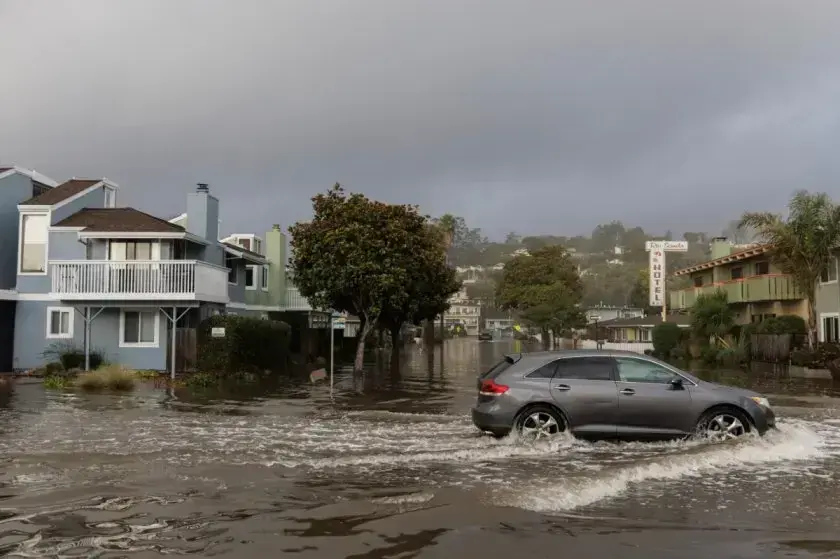
Canyon Lake is a lakeside city where winters are rarely extreme, which makes a real storm easy to underestimate. The December 2010 storm flood and the storm events that followed show what runoff does when it reaches a home.
Key takeaways
- The December 22, 2010 storm flood led to a State of Emergency and closed three main roads inside the community.
- Storm water also ran over the top of Railroad Canyon Dam that month, and a second State of Emergency came on January 21, 2011.
- Flood water that carries mud and runoff is treated as contaminated, not clean.
- Extraction comes first, then removal of wet porous materials and drying to readings.
- Photographs taken before cleanup help with any claim.
What December 2010 showed
On December 22, 2010 a winter storm flood brought a State of Emergency to Canyon Lake. Three main roads inside the community were closed with damage.
Storm water also ran over the top of the dam at Canyon Lake that month. Another State of Emergency followed on January 21, 2011, again with three main roads closed with damage.
- December 22, 2010: Winter storm flooding and a State of Emergency.
- December 2010: Storm water over the top of the dam.
- January 21, 2011: A second State of Emergency declared.
- January 19 to 23, 2017: A winter storm series that brought a federal disaster declaration.
Why a quiet climate still floods
Winters in Canyon Lake are rarely extreme, and lows almost never reach a frost. That makes the city feel safe from weather, but the lake sits in a larger watershed.
Canyon Lake is fed by runoff from the San Jacinto River and Salt Creek, and the city hazard plan names flooding from 100 year winter storms among its most prominent hazards. A big storm sends water quickly to a low point, and homes near that point see it first.
What changed after the 2010 storm
Canyon Lake has not stood still since December 2010. A flood channel project with a bridge and roadway at Goetz Road and Railroad Canyon Road, plus an improved storm drain, was completed in December 2012.
The dam has its own history. The spillway was widened to 376 feet in 1996, and in early 2001 the lake spilled over Railroad Canyon Dam for the first time in three years.
These projects reduce risk on the main routes, but they do not stop water from reaching a low home during a heavy storm. A homeowner still needs a plan for what happens inside the house.
Storm water is not clean water
Water that arrives with a storm carries mud, yard chemicals and debris on the way. When it enters a house, it is handled as contaminated water, often called Category 3.
That changes the work. Wet carpet and pad are removed instead of dried, and the wall base is opened so the cavity can be cleaned.
What a homeowner should leave alone
Wading through floodwater and handling wet debris without protection carries a health risk. Children and pets should be kept out until the area is cleared.
- Do not wade through standing water with the power on.
- Do not run a household vacuum on a wet floor.
- Do not keep food that touched the water.
The first day after water enters
The first day sets the pace for the whole job. The sequence below keeps the damage from spreading while the team is on the way.
For a homeowner, the most useful steps are the simple ones.
- Photograph the high water mark on walls and furniture before anything moves.
- Shut off power to flooded areas if it is safe to reach the panel.
- Lift small items and rugs off wet floors.
- Leave carpet in place for the team to assess rather than pulling it up.
- Call for storm and flash flood cleanup and extraction.
How extraction and drying work
Pumps and extractors remove the standing water first. Mud and silt are scooped out and the floor is cleaned before any drying equipment is set.
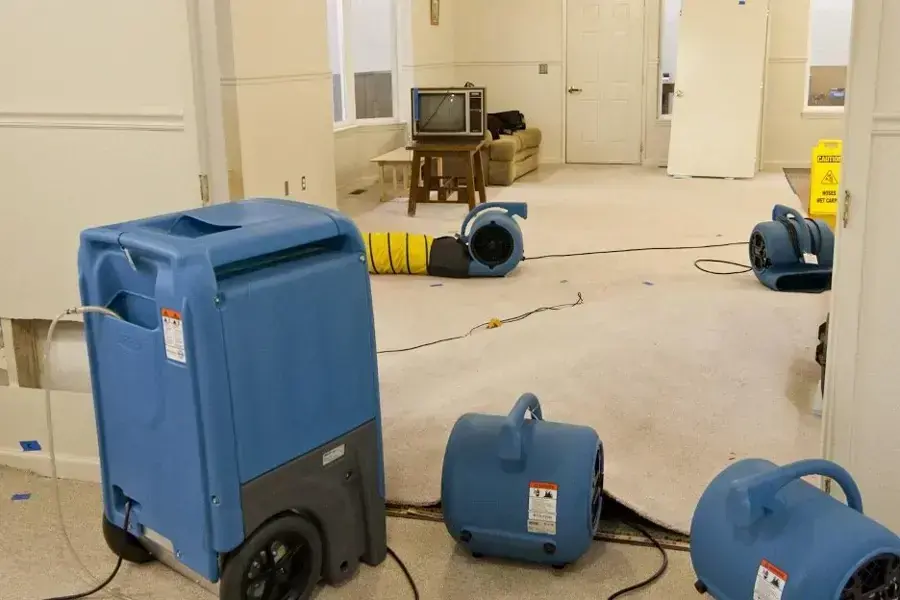
Once the water is gone, moisture meters map what is still wet. Water extraction is followed by air movers and dehumidifiers that run until readings fall to the drying goal.
What gets removed
Porous materials that soaked up storm water are removed. These include carpet, pad, wet insulation and the bottom of drywall in contact with the water.
- Carpet and pad that took in contaminated water.
- Drywall cut above the water mark.
- Cabinet kicks and baseboards opened for drying.
What gets cleaned and treated
Hard surfaces are cleaned and treated with an antimicrobial before they are dried. The aim is a clean, dry structure rather than a quick look of normal.
Rooms and materials hit hardest
Water usually enters at the lowest point. That tends to be a garage, a ground floor room or a walkout area, and it spreads outward from there.
Some materials recover and others do not. The restoration team sorts them during the first walkthrough.
- Carpet and pad: Usually removed after contaminated water.
- Drywall: Cut above the water mark and replaced after drying.
- Hardwood and laminate: Often lifted when water gets beneath them.
- Cabinets and furniture: Dried if the base is not soaked through.
- Contents in the garage: Cardboard and paper are rarely worth saving.
After the water is gone
A flooded home is not finished when the standing water leaves. Wall cavities, subfloors and the slab can hold moisture for days.
Drying continues until moisture readings match dry reference spots in the house, not until the surfaces feel dry to the touch. The structural drying step is what prevents lingering damage and odor.
Before rebuilding starts, the team shares the readings so the homeowner and any adjuster can see that the structure is dry.
The insurance claim and who handles what
Flood water is often treated differently from other water on a policy. The wording on flood coverage should be read, and the insurer asked, before assuming anything.
Dated photographs, a written list of damaged items and receipts for emergency work all help. The January 2017 federal disaster declaration shows that assistance can exist for a storm, but it depends on the event and the household.
Who handles what in Canyon Lake
Canyon Lake is both a gated community and a governed city. The Canyon Lake Property Owners Association runs the common areas inside the gates, while areas outside the gates fall under the city council.
Elsinore Valley Municipal Water District provides water and sewer service. A homeowner whose street drains slowly or whose sewer backs up can contact the district about the public side.
Questions
Is storm flood water treated differently from a pipe leak?
Yes. Storm water carries mud and runoff, so it is handled as contaminated water. Porous materials are usually removed rather than dried in place.
How soon should extraction start?
As soon as it is safe. Standing water soaks into drywall and flooring the longer it sits, so starting early limits how much has to be removed.
Can a homeowner clean up flood mud alone?
Small areas can be cleared with protection, but mud under flooring and inside walls needs equipment and a drying plan. Contaminated water adds a health risk.
Does homeowners insurance cover storm flooding?
It depends on the policy. Flood water is often treated separately from sudden pipe water, so the policy wording and the insurer should be checked before assuming coverage.
What does a quiet winter climate change about the risk?
Very little. Lows rarely drop below freezing, but heavy rain over a large watershed can still send water into a low home, as it did in December 2010.
Did Canyon Lake see more than one storm flood?
Yes. Local history lists the December 22, 2010 storm flood, a State of Emergency on January 21, 2011, and a winter storm series from January 19 to 23, 2017 that brought a federal disaster declaration.