Canyon Lake Structural Drying and Dehumidification
Wet framing, drywall and floors in a Canyon Lake home are dried with dehumidifiers and air movers, and the work is tracked with daily readings until every material matches the dry reference.
(888) 450-9281Wet walls or floors? Call Canyon Lake now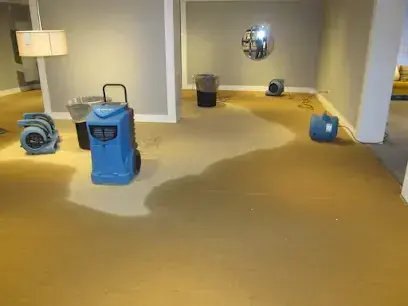
First steps for structural drying and dehumidification in Canyon Lake
- 1
Shut off the source
Stop the leak or close the main valve before any drying equipment is set up.
- 2
Keep wet rooms closed
Close doors between wet and dry rooms so equipment dries one zone at a time.
- 3
Remove loose items
Lift rugs, boxes and furniture off wet floors so air can reach the surface underneath.
- 4
Call before it dries
Surfaces feel dry before materials are. Call so readings show what is still wet inside.
How structural drying and dehumidification is handled in Canyon Lake
Structural drying is the controlled removal of moisture from the materials that hold a building together. It goes beyond what a fan can do, because water sits inside framing, subfloors and wall cavities where air cannot reach.
The tech who does the walkthrough maps moisture before any equipment goes down, so the drying plan follows what is actually wet. Equipment stays until the readings say dry, not until it looks dry.
What does structural drying and dehumidification cost in Canyon Lake, CA?
Structural drying in Canyon Lake usually runs $1,200 to $6,000, driven by the machine count and the number of drying days.
A single lightly wet room
Several rooms, deeper wetting
Dense materials, slab or hardwood
Ranges are typical, not a quote: category of water, square footage, material class and how fast drying started move the number most. Run the water damage cost calculator for a closer range.
The structural drying and dehumidification process, start to dry
- 1
Map and measure
Meters and air readings show how wet each material is.
- 2
Place the machines
Dehumidifiers and air movers push dry air over every wet surface.
- 3
Check each day
Readings go into the log daily, and machines move as materials dry.
- 4
Release the equipment
Machines leave once every material matches the dry reference.
Drying in a hot, dry climate
Summers in Canyon Lake run hot, with heat waves that can pass 100 degrees, and winters are rarely extreme. Dry outdoor air can make a wet structure seem finished long before the lumber and drywall agree, which is why meters rather than touch decide the end.
The equipment is chosen for the loss class, from light surface wetting to water that has soaked deep into slab or hardwood, and the goal is to bring each material back to the dry reference set at the start.
- LGR dehumidifiers for most wet rooms
- Desiccant units where materials are dense or cold
- Air movers aimed along walls and floors
- Injection ports for closed wall cavities
Hardwood and other dense materials dry slowly and can cup or crack if dried too hard, so they get slower, gentler treatment than drywall.
How the drying is managed
Day one starts with a moisture map and a psychrometric reading of the air, which sets the number and placement of machines. Each day after that, readings of the air and of the materials are logged and equipment is moved or removed as materials dry.
Equipment stays only as long as it is working. When the readings reach the dry reference, the machines leave and the log goes into the claim file. The first stage, water extraction, reduces how much drying is needed.
Claims and costs
Drying is priced mostly by the number of machines and days. Insurers generally expect daily logs, which is why they are kept, and the cost calculator shows a typical range. Coverage depends on the cause of the loss and the policy.
Trade fact: A dehumidifier that stays on after the materials are dry only adds to the bill. Daily readings tell the crew exactly when to pick it up.
Structural drying and dehumidification across Canyon Lake and nearby towns
Drying equipment goes into homes across ZIP 92587 in Canyon Lake, from Canyon Lake Towne Center and the Main Gate area to East Bay and the Quail Valley side of Goetz Road.
The same service nearby: structural drying and dehumidification in Menifee, Wildomar, Perris.
Water damage restoration in Canyon Lake · every town covered
Related water damage services in Canyon Lake
Structural Drying and Dehumidification questions in Canyon Lake, CA
Why not just use fans?
Fans move air, but they do not remove moisture from it. Dehumidifiers pull water out of the air, and without them the humidity climbs and the structure stays wet.
What is the difference between LGR and desiccant units?
LGR units suit most wet rooms and warm conditions. Desiccant units handle cold spaces and very dense or deeply wet materials where an LGR struggles.
How is dry confirmed?
Meters read each material and are compared against a dry reference from a similar unaffected area. When the numbers match, the equipment can leave.
How long does structural drying take?
Most jobs take three to five days. Dense materials like hardwood or slab, or large wet areas, take longer, and the daily readings set the timeline.
Is drying part of an insurance claim?
After a covered sudden loss it usually is. The daily logs show the adjuster what was done and when, and coverage depends on the policy.
Still dealing with it?
A room can feel dry on the surface while the framing and subfloor are still holding water.
Wet framing or floors in Canyon Lake?
Moisture is mapped, machines are matched to the loss and daily readings show exactly when each material is dry.
(888) 450-9281Begin the Canyon Lake drying