Structural Drying and Dehumidification in Perris, CA
24/7 structural drying in Perris, CA. Dehumidifiers and air movers are sized to the class of loss and left running until floors, framing and drywall match a dry reference.
(888) 450-9281Wet structure in Perris? Call dispatch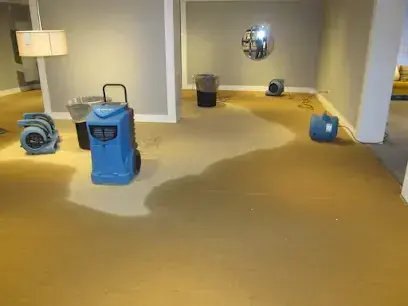
First steps for structural drying and dehumidification in Perris
- 1
Keep the equipment running
Leave air movers and dehumidifiers on, even when the noise or heat is annoying.
- 2
Close doors and windows
A closed room lets dehumidifiers pull moisture out faster.
- 3
Do not move equipment
Technicians place each unit by moisture reading, so moving one can slow the dry-out.
- 4
Keep the logs
Save the daily reading sheets for the adjuster and the rebuild crew.
How structural drying and dehumidification is handled in Perris
Structural drying is the long middle of a water loss, after the water is out and before the rebuild. Dehumidifiers and air movers pull moisture out of drywall, framing, subfloor and flooring until each reads dry.
The tech who does the walkthrough maps moisture before any equipment goes down, so the drying plan follows what is actually wet. Equipment stays until the readings say dry, not until it looks dry.
What does structural drying and dehumidification cost in Perris, CA?
In Perris, structural drying usually runs $1,200 to $6,000, priced mostly by how many air movers and dehumidifiers run and for how many days.
One room, light loss
Several rooms, Class 3
Class 4, concrete or hardwood
Ranges are typical, not a quote: category of water, square footage, material class and how fast drying started move the number most. Run the water damage cost calculator for a closer range.
The structural drying and dehumidification process, start to dry
- 1
Map the moisture
Meters and a thermal camera mark every wet area.
- 2
Set the equipment
Dehumidifiers and air movers are sized and placed to the loss.
- 3
Read it daily
Moisture, temperature and humidity are logged each visit.
- 4
Release the room
Equipment leaves when readings match the dry reference.
How drying plans are set in Perris
A drying plan follows meter readings, not a local calendar, because every loss is different. Perris averages about 10.42 inches of rain a year and has long hot summers, but neither tells how fast a given wall will dry.
The class of loss sets the equipment. Class 1 is a small area of low-porosity material, Class 2 is a whole room with carpet and wicking walls, Class 3 is water from above and Class 4 is deeply held water in dense materials such as concrete and hardwood.
- Meters and a thermal camera to map wet areas
- LGR dehumidifiers for most rooms
- Desiccant units for deep or cool spaces
- Air movers placed along walls and under cabinets
What happens each day
A technician returns to read moisture in the same spots, checks the temperature and humidity, and moves or removes equipment as areas reach dry. Those readings go into a log. The drying team never calls a room finished from how it looks or feels.
Cost, time and the claim
Equipment count and days on site drive the price. The drying time estimator shows a typical window, and the cost calculator gives a range. For the first stage, see water extraction in Perris.
Daily logs are the proof an adjuster uses. Coverage depends on your policy, so check with your own insurer.
Trade fact: A dehumidifier works best in a closed room, so doors and windows stay shut during drying even when the house feels stuffy.
Structural drying and dehumidification across Perris and nearby towns
Structural drying covers ZIP 92570 and 92571 in Perris, from Downtown Perris and the D Street area to Villages of Avalon and the streets along Interstate 215.
The same service nearby: structural drying and dehumidification in Menifee, Canyon Lake, Wildomar.
Related water damage services in Perris
Structural Drying and Dehumidification questions in Perris, CA
How do you know a wall is dry?
A moisture meter reading is compared with a dry reference taken from an unaffected wall of the same material. Looks and touch are not enough.
Why is the dehumidifier so loud and hot?
It condenses water out of the air and releases heat while it works. The noise and warmth are normal and a sign the equipment is pulling moisture.
Can I turn the equipment off at night?
Please do not. Drying runs around the clock, and stopping it for the night can let moisture settle back into materials.
How long will drying take?
Many contained losses dry in three to five days, and slab, hardwood and wet cavities take longer. Readings decide, not a fixed schedule.
Does insurance pay for drying equipment?
Drying after a sudden covered loss is usually included, with the equipment days itemized. Ask your own insurer.
Still dealing with it?
A Perris room that feels dry can still hold water in its drywall and framing, which is why readings run the schedule.
Wet walls or floors in your Perris home?
Equipment is sized to the loss, readings are logged daily and the file is ready for the adjuster at the end.
(888) 450-9281Start the Perris dry-out