Structural Drying in San Jacinto, CA
24/7 structural drying in San Jacinto. After the water is out, the crew maps moisture, sets LGR dehumidifiers and air movers and reads the framing, drywall and floors each day until they match a dry reference.
(888) 450-9281Need drying? Call San Jacinto dispatch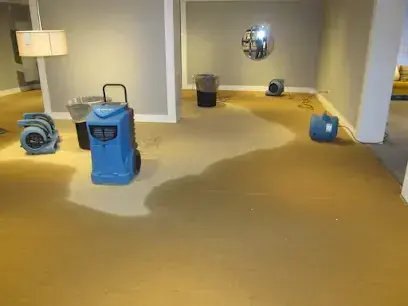
First steps for structural drying and dehumidification in San Jacinto
- 1
Keep the house closed
Leave doors and windows shut during drying so the dehumidifiers can work.
- 2
Leave equipment running
Do not switch off air movers or dehumidifiers between visits.
- 3
Keep the thermostat steady
A stable indoor temperature helps the drying equipment work correctly.
- 4
Hold off on repairs
Wait on paint and flooring until the final readings are confirmed.
How structural drying and dehumidification is handled in San Jacinto
Drying is the long middle of every water job. Extraction takes out the liquid, but framing, subfloors and drywall hold moisture that only air and dehumidification can pull out, and rushing it leaves hidden dampness behind.
The tech who does the walkthrough maps moisture before any equipment goes down, so the drying plan follows what is actually wet. Equipment stays until the readings say dry, not until it looks dry.
What does structural drying and dehumidification cost in San Jacinto, CA?
Structural drying in San Jacinto generally falls between $1,200 and $6,000, driven by the number of machines and how many days they run.
One room, Class 1 to 2
Several rooms, Class 3
Class 4, dense materials
Ranges are typical, not a quote: category of water, square footage, material class and how fast drying started move the number most. Run the water damage cost calculator for a closer range.
The structural drying and dehumidification process, start to dry
- 1
Classify the loss
The class and category of water decide how much equipment each room needs.
- 2
Place the equipment
Air movers are positioned along walls and dehumidifiers are sized to the room.
- 3
Monitor each day
Readings are logged, and equipment is moved or removed as materials dry.
- 4
Confirm dry
Final readings are compared with the dry reference and the file is closed.
Why drying follows a standard
The IICRC S500 sets out how to classify a loss, how much equipment a room needs and how to prove the work is finished. Class 1 is a small wet area, Class 2 is a whole room, Class 3 is water from above and Class 4 is deep water in dense materials like hardwood and concrete.
That classification decides the number of air movers and dehumidifiers, not a guess about how wet the room looks.
Skipping steps is the usual reason a repair fails: paint blisters, flooring cups and a musty smell returns because the framing was never dried to its reference.
Dry weather is not dry framing
San Jacinto has hot, dry summers and a cool, wet winter, and dry outdoor air does not mean a wet wall is drying. Closed up houses hold moisture, and an air conditioner running against open windows works against the drying.
- Doors and windows stay shut during drying
- Equipment runs day and night
- Readings are taken every day
- Equipment comes off only when readings match
How the crew proves it is dry
Each visit, the tech records temperature, humidity and moisture readings and adjusts equipment as the structure dries. A dry reference reading from an unaffected part of the house is the target. Equipment is placed by formula, not by feel, and a tech adds or removes machines as the readings change from day to day.
Drying starts after water extraction and, for large commercial losses, runs in phases as laid out under commercial water damage. The cost calculator gives a typical range.
Structural drying and dehumidification across San Jacinto and nearby towns
Drying crews work in San Jacinto ZIP 92583, 92582 and 92581, from Esplanade and The Villages of San Jacinto to Trails, Midway and Five Points.
The same service nearby: structural drying and dehumidification in Menifee, Hemet, Perris.
Water damage restoration in San Jacinto · every town covered
Related water damage services in San Jacinto
Structural Drying and Dehumidification questions in San Jacinto, CA
How long does structural drying take?
Most losses take three to six days, though Class 4 materials like hardwood and concrete can take longer. Daily readings decide.
Why are the machines so loud?
Dehumidifiers and air movers run around the clock to pull water out of dense materials. The noise is a sign they are working.
Will my power bill go up?
Yes, drying equipment draws electricity. Some policies reimburse the extra cost, so keep your bill.
Can I open the windows to help?
No. Opening windows lets humid air in and slows the dehumidifiers.
Does drying happen at night?
Yes. The equipment runs around the clock because moisture keeps leaving the materials only while the air stays dry. The tech visits to read and adjust, but the machines work without stopping.
How do I know the structure is dry?
The tech compares readings in the affected areas with a dry reference from an unaffected part of the house.
Still dealing with it?
Water that is not dried out of framing and subfloors keeps causing problems long after the surface looks fine.
Wet walls or floors in your San Jacinto home?
Moisture is mapped, equipment is sized to the loss and the file records every reading.
(888) 450-9281Start the drying