Water Heater Leak Cleanup in San Jacinto, CA
24/7 water heater leak cleanup in San Jacinto. A failed tank can soak a closet, a garage wall and the rooms beside it, so the crew pumps out the water and reads every neighboring surface before drying.
(888) 450-9281Tank leaking? Call San Jacinto dispatch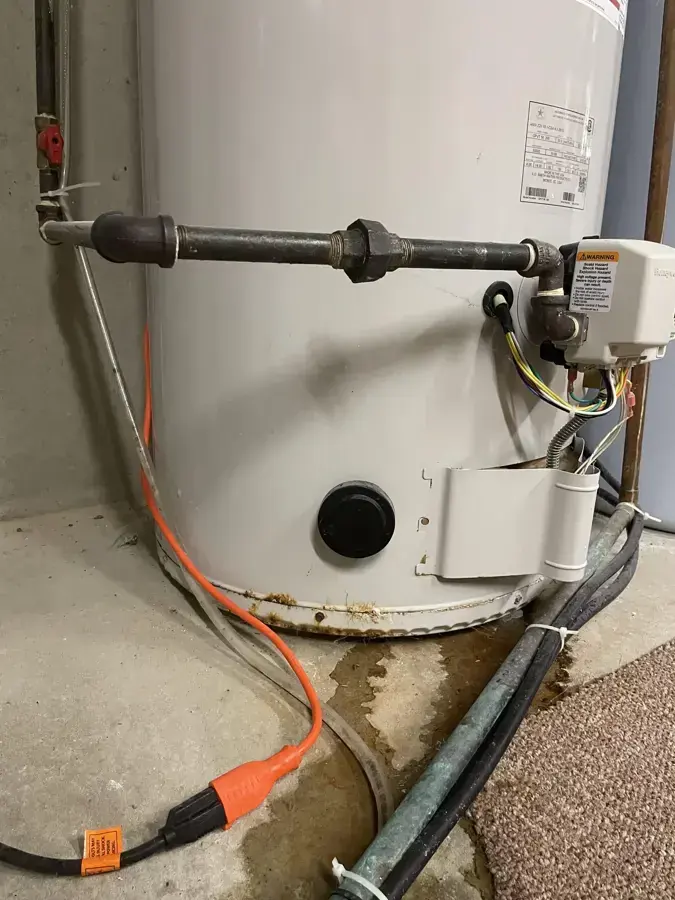
First steps for water heater leak cleanup in San Jacinto
- 1
Close the cold inlet
Turn the cold supply valve above the tank to off. If it will not move, use the main shutoff for the house.
- 2
Switch off the heater
Set a gas unit to pilot or off, and cut power to an electric unit at the breaker panel only from dry ground.
- 3
Photograph the area
Capture the tank, the puddle, the walls beside it and any stored items that got wet.
- 4
Clear the floor
Move boxes and small furniture away from the wet area so the crew can reach the base of the walls.
How water heater leak cleanup is handled in San Jacinto
A water heater leak usually starts small. A pinhole at a seam or a corroded fitting seeps for days, or the tank gives out and empties across the floor. Either way the water heads for whatever is closest: wall bases, cabinet backs, stored boxes and the flooring in the next room.
The tech who does the walkthrough maps moisture before any equipment goes down, so the drying plan follows what is actually wet. Equipment stays until the readings say dry, not until it looks dry.
What does water heater leak cleanup cost in San Jacinto, CA?
A San Jacinto tank leak generally costs $1,500 to $5,000 to clean up, and a closet tank next to finished floors lands near the top.
Garage tank, noticed quickly
Closet tank with wet rooms nearby
Leak ran for days
Ranges are typical, not a quote: category of water, square footage, material class and how fast drying started move the number most. Run the water damage cost calculator for a closer range.
The water heater leak cleanup process, start to dry
- 1
Pump out the tank water
Standing water around the unit is extracted and the supply is confirmed off.
- 2
Read what it touched
Meters and a thermal camera check walls, floors and cabinet bases for hidden moisture.
- 3
Remove and dry
Wicked baseboards and wet pad come out, then air movers and dehumidifiers take over.
- 4
Record the result
Final readings and photos are filed for the insurer and the rebuild.
What a failed tank can reach
A tank in a garage sends water across the concrete toward the shared wall and under the door into the house. A tank in a hall or laundry closet sits near finished floors, so carpet, plank flooring and cabinet kicks can all take on water at once.
The water is clean at first, which is Category 1, and that is the best window for drying materials in place.
- Baseboards and the bottom of the drywall
- Carpet pad and floating floors
- Boxes, shelves and stored items
- Cabinet bases next to the closet
Sediment and age wear a tank from the inside, and the first signs are often a damp patch at the base, rust streaks or a drip from the relief valve pipe. Catching it then keeps the loss to one wall instead of three rooms.
How the cleanup runs
The crew confirms the supply is shut off, pumps out standing water and reads the surrounding walls and floors with moisture meters and a thermal camera. Items that wicked water upward are removed, and everything else stays in place under air movers and dehumidifiers.
Anything stored on the floor, such as boxes, paint cans and holiday decorations, soaks up water fast and is moved out before the floor is dried. Hot water that escaped is also a safety concern, so the closet is kept clear until it has cooled.
Anything stored on the floor, such as boxes, paint cans and holiday decorations, soaks up water fast and is moved out before the floor is dried. Hot water that escaped is also a safety concern, so the closet is kept clear until it has cooled.
Prompt water extraction keeps the water from traveling any farther into the house.
After the drying is finished
A plumber handles the failed unit. Many homeowners replace a tank that has leaked, and the plumber can add a drain pan and a leak alarm so a repeat is noticed early.
Photos, meter readings and daily logs go into one file for the adjuster. The cost calculator gives a typical range for a tank leak before any work begins.
Trade fact: A leaking tank can hold dozens of gallons, enough to wet a whole closet and the rooms around it, which is why the cold inlet valve on top should be closed first.
Water heater leak cleanup across San Jacinto and nearby towns
Tank leak cleanup serves San Jacinto ZIP 92583, 92582 and 92581, including The Cove, Trails, Midway and Soboba Springs, along with the neighborhoods between them.
The same service nearby: water heater leak cleanup in Menifee, Hemet, Perris.
Water damage restoration in San Jacinto · every town covered
Related water damage services in San Jacinto
Water Heater Leak Cleanup questions in San Jacinto, CA
Why do water heaters leak?
Tanks corrode from the inside over time, and fittings, valves and relief pipes can fail too. A slow seep may go unnoticed until the flooring around the base feels soft.
Should the heater be replaced after a leak?
A leaking tank body usually cannot be repaired, so most homeowners replace it. A plumber can tell whether the leak came from the tank or from a fitting.
How far can the water travel?
Water leaves a tank in every direction, then follows the lowest path through doorways, under baseboards and into neighboring rooms. Readings show the real boundary.
Does homeowners insurance cover a water heater leak?
Sudden tank failures are often covered for the water damage, while the heater itself and slow seepage often are not. Your policy decides, so ask your insurer.
Is the wet drywall always removed?
No. Clean water caught early often dries in place. The bottom of a wall is cut only when meters show water wicked up or insulation inside is wet.
Still dealing with it?
A tank that leaks overnight can leave a closet floor, a wall base and hallway carpet wet by morning.
Water around a San Jacinto water heater?
Tank water is pumped out, wet materials come out and walls and floors are dried to a reading.
(888) 450-9281Start the cleanup